Bethesda & Potomac Roofing Contractor Guide
Bethesda & Potomac Roofing Contractor Guide: Repairs, Replacements & What to Ask
Key Takeaways
- Maryland requires roofing contractors to hold an MHIC license — verify it before signing any contract
- Bethesda and Potomac homes with slate or cedar shake roofs require specialty contractors with documented restoration experience
- Montgomery County has permit requirements for full roof replacements — confirm your contractor will pull the permit
- Flashing is the most frequently overlooked upgrade during a roof replacement and the leading cause of post-installation leaks
- High-value homes in Bethesda and Potomac benefit from premium underlayment and manufacturer-certified installation programs
Choosing a roofing contractor in Bethesda or Potomac is one of those decisions that feels simple until you start making phone calls. Suddenly you are comparing estimates that differ by thousands of dollars, hearing terminology you have never encountered, and wondering whether the friendly guy who showed up in a truck with magnetic signs is as qualified as the company with a showroom. It is a lot to navigate, and the stakes are high because a poorly executed roof job does not just look bad. It leaks, it shortens the life of your home's most important protective layer, and it costs more to fix than it would have cost to do right the first time.
Sterling Roofers serves Bethesda, Potomac, and nearby DMV areas, and we have spent years helping homeowners in Montgomery County make confident roofing decisions. This guide covers everything from recognizing when your roof needs attention to understanding what belongs in a proper estimate, deciding between repair and replacement, and knowing exactly what to ask before signing anything. No jargon, no sales pitch, just the practical information you need to protect your home and your investment.
Bethesda vs. Potomac Roofing Needs
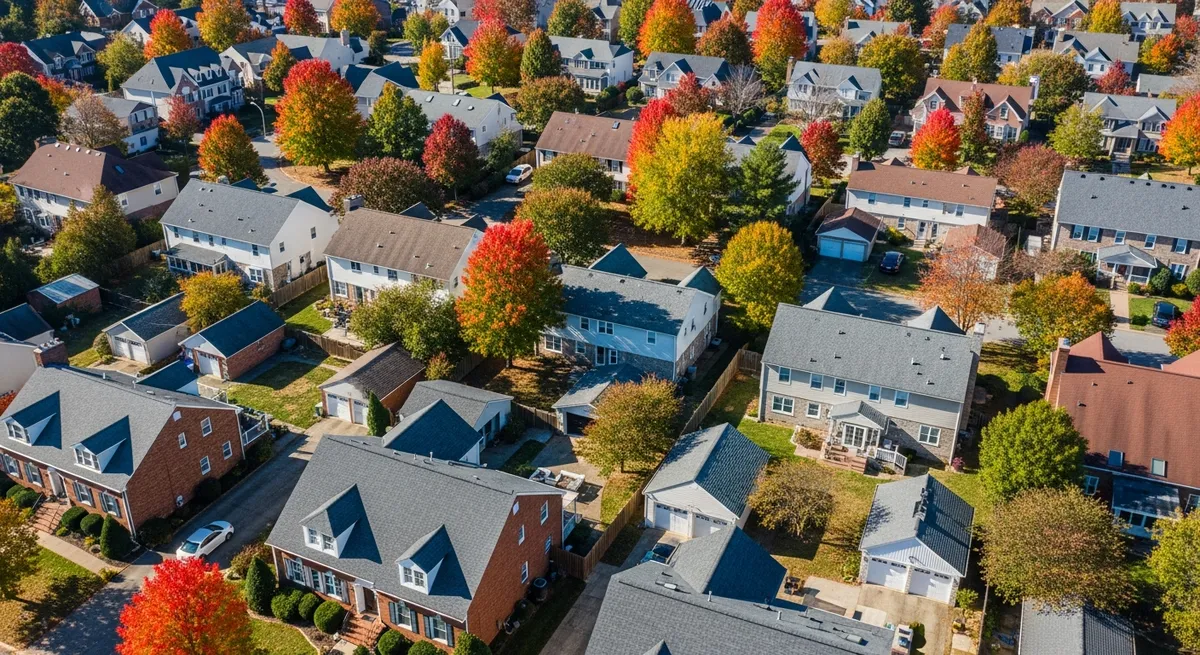
Bethesda and Potomac sit just a few miles apart, but the roofing landscape in each community has its own character. Bethesda features a dense mix of housing styles ranging from mid-century colonials and Cape Cods to newer construction and renovated bungalows. Many Bethesda neighborhoods were built in the 1940s through 1960s, which means a significant number of roofs in the area are on their second or third replacement cycle. Older homes sometimes reveal surprises during tear-off, such as outdated flashing details, non-standard decking materials, or multiple layers of shingles that previous owners stacked rather than stripped.
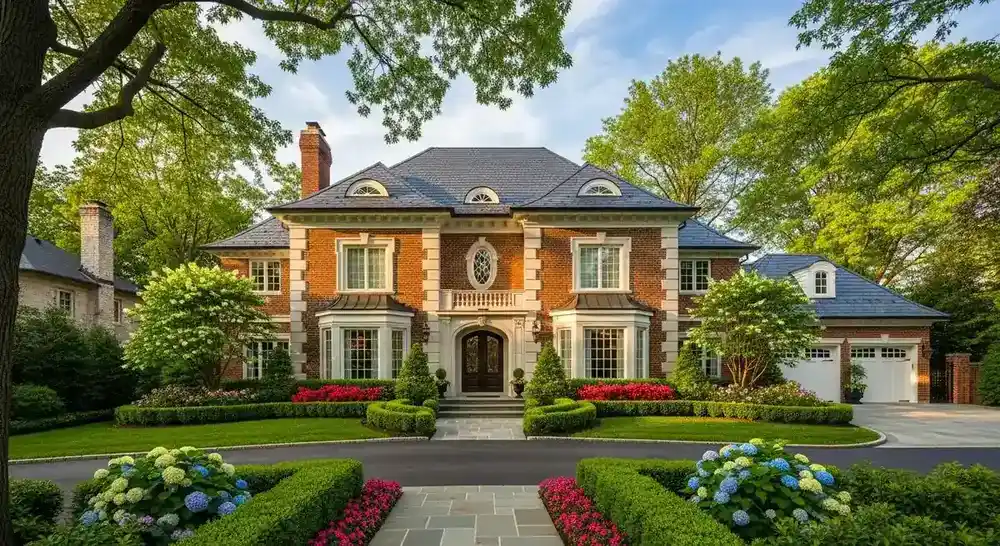
Potomac leans toward larger estate-style homes on wooded lots, many of which were built from the 1970s through the 1990s. These properties frequently have complex rooflines with multiple valleys, dormers, skylights, and chimney penetrations, all of which increase both the cost and the technical difficulty of a roofing project. The tree canopy in many Potomac neighborhoods is spectacular but creates additional challenges: falling limbs during storms, heavy leaf debris that clogs gutters and accelerates shingle deterioration, and shaded roof sections that stay damp longer and develop moss or algae growth.
Weather exposure is another shared factor. Both Bethesda and Potomac experience the full range of Mid-Atlantic weather: humid summers that push attic temperatures well above 130 degrees, winter freeze-thaw cycles that stress flashing and sealants, and severe thunderstorms that can deliver damaging winds and hail with little warning. A roofing system in this region works harder than one in a milder climate, and the contractor who installs or repairs it needs to understand those demands intimately.
Both communities share the same Montgomery County permitting requirements, the same weather exposure along the I-270 corridor, and the same need for a roofing contractor Bethesda and Potomac homeowners can trust to handle the specific demands of their property. The best contractor for a straightforward Bethesda colonial and a sprawling Potomac estate might be the same company, but the scope of work will look very different.
Roof Repair Signs Homeowners Miss
Most homeowners do not think about their roof until something goes visibly wrong, like a ceiling stain or a shingle in the yard after a storm. But by the time those symptoms appear, the underlying problem has usually been developing for months or even years. Learning to spot the early warning signs can save you thousands of dollars and a great deal of inconvenience.
Granule loss is one of the earliest indicators that shingles are aging past their prime. If your gutters and downspout splash pads are consistently coated with dark, sandy material, your shingles are shedding the protective granules that shield them from UV radiation. A little granule loss on a new roof is normal as manufacturing residue washes away, but persistent granule accumulation on a roof that is 15 years or older is a clear signal that the shingles are deteriorating.
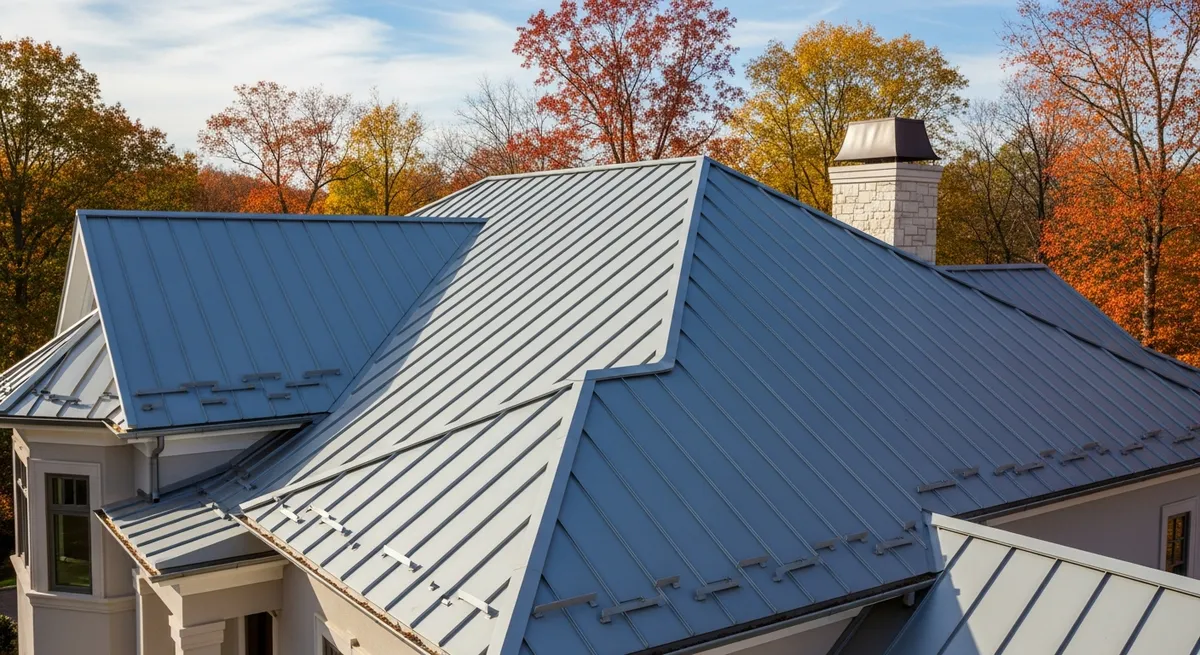
Flashing deterioration is another frequently overlooked issue. Flashing is the metal material that seals joints around chimneys, skylights, vent pipes, and where different roof planes meet in a valley. Over time, flashing can lift, corrode, or lose its sealant, creating tiny gaps that allow water to penetrate. These leaks are insidious because the water often travels along rafters or sheathing before emerging as a stain far from the actual entry point, making the source difficult to pinpoint without professional inspection.
Sagging sections of roof or visible dips in the roofline deserve immediate attention. Sagging can indicate compromised decking, failed rafters, or long-term moisture damage to structural components. If you notice any change in the plane of your roof, do not wait. Contact a qualified roofing contractor Bethesda homeowners rely on for an assessment before the issue progresses.
Interior signs matter too. Peeling paint or bubbling wallpaper near the ceiling, musty odors in the attic, and daylight visible through the roof boards are all indicators that moisture is entering somewhere. Even without a dramatic leak, slow moisture infiltration can saturate insulation, reducing its effectiveness and increasing your energy bills while creating conditions for mold growth.
Moss and algae growth on shingles is another issue that Bethesda and Potomac homeowners frequently dismiss as cosmetic. While a green tinge on north-facing slopes might look harmless, moss roots work their way under shingle edges and lift them over time, creating gaps where water enters. Algae, while less structurally damaging, indicates sustained moisture retention that accelerates granule loss. Both conditions are more common on shaded roofs surrounded by mature trees, which describes a significant portion of homes in these neighborhoods.
The bottom line is that most roof problems are gradual rather than sudden. By the time you notice a water stain on the ceiling, the underlying issue has likely been developing for months. Scheduling a professional inspection every three to five years, or after any significant storm, gives you the chance to catch small problems before they become expensive ones.
What a Proper Estimate Should Include
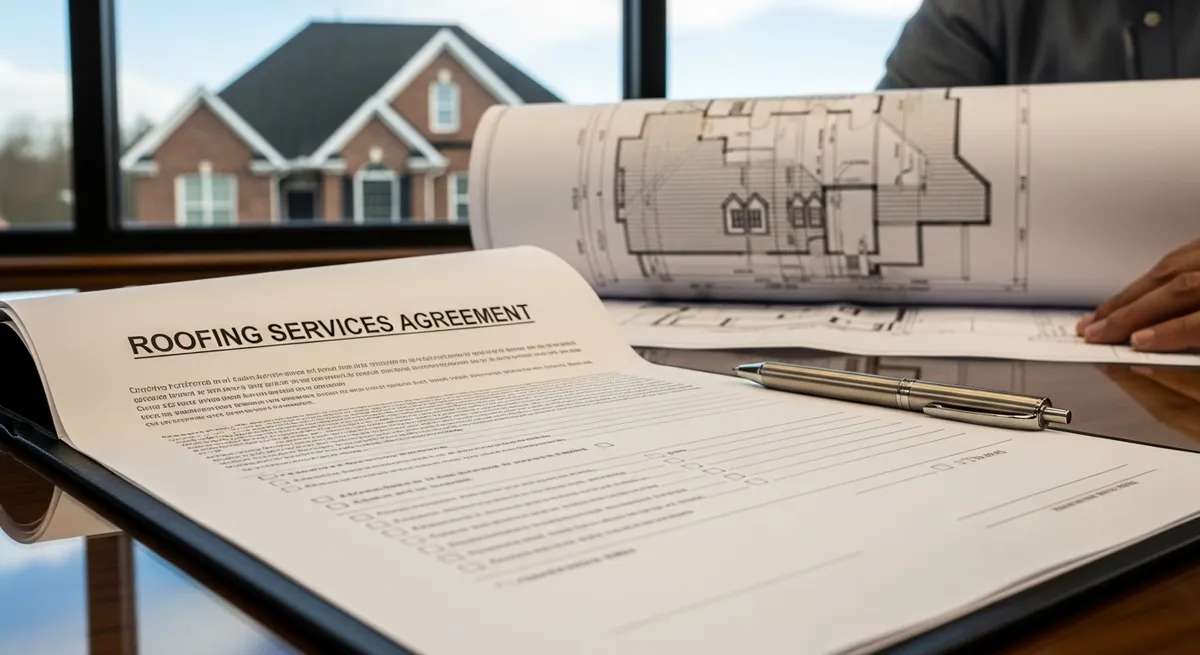
A roofing estimate is more than a number on a piece of paper. It is a document that defines exactly what you are paying for, and it is your primary protection if the work does not match the promise. When you compare estimates from multiple roofing contractors Bethesda MD homeowners recommend, look for these elements in every proposal.
The scope of work should describe the project in clear, specific language. For a replacement, that means specifying whether all existing layers will be removed down to the decking, the type and brand of underlayment, the shingle manufacturer and product line, the flashing material and method, ventilation modifications, and drip edge installation. Vague language like "replace roof" without these details leaves too much room for interpretation and too little recourse if corners are cut.
Material specifications should be explicit. There is a meaningful difference between a builder-grade three-tab shingle and a premium architectural shingle from a manufacturer like GAF, CertainTeed, or Owens Corning. The estimate should name the specific product, not just the category. The same applies to underlayment: synthetic underlayment outperforms felt in nearly every measurable way, and you want to know which one is going on your roof.
Payment terms deserve careful attention. Reputable contractors typically require a modest deposit at contract signing, with the balance due upon completion and your satisfaction. Be cautious of any company that demands more than a third of the project cost upfront or requests full payment before the work begins. A legitimate potomac roofing company or Bethesda contractor has the working capital and supplier relationships to purchase materials without requiring your full payment in advance.
Warranty information should appear in the estimate. You are looking for two separate warranties: the manufacturer's warranty on the roofing materials and the contractor's workmanship warranty on the installation itself. A quality contractor stands behind their work for a minimum of five years, with many offering ten years or longer. For details on what to look for in roofing contracts, see our guide on roof replacement costs in Northern Virginia.
Repair vs. Replacement: A Decision Guide
This is the question that keeps homeowners up at night: do I need to fix what I have, or is it time to start over? The answer is almost never black and white, but there are some reliable guideposts that experienced roofing contractors Bethesda MD professionals use to make the recommendation.
Age is the starting point. If your asphalt shingle roof is under 15 years old and the damage is isolated to one area, repair is almost always the right call. Shingles in that age range still have significant remaining life, and a skilled repair can restore the affected section without disturbing everything else. On the other hand, if the roof is 20 years old or older and you are patching a new problem every year or two, you are essentially paying for a replacement on the installment plan but without the benefit of a continuous, warranted system.
The extent of the damage matters as much as the age. A roof that is only 12 years old but has widespread hail damage affecting 30 percent or more of its surface is a replacement candidate because the compromised shingles will continue to fail even if you patch the worst spots. Conversely, a 22-year-old roof with one leaky valley flashing might last several more years with a targeted repair if the rest of the system is in reasonable condition.
Your long-term plans for the home also factor in. If you are planning to sell within the next two to three years, a new roof significantly improves marketability and often recoups the majority of its cost at closing. If you are staying put for decades, the calculation shifts toward overall lifecycle cost. Sometimes spending more now on a full replacement with premium materials saves money over 30 years compared to a series of repairs on aging shingles. Our storm damage repair guide covers scenarios where insurance may offset replacement costs after severe weather events.
Energy efficiency is another angle that Bethesda and Potomac homeowners increasingly consider. Modern roofing systems with proper ventilation, reflective shingle technology, and upgraded underlayment can measurably reduce cooling costs during Maryland summers. If your current roof lacks adequate ventilation or uses outdated materials, a replacement offers the opportunity to bring the entire system up to current performance standards. It is not just about keeping water out anymore. A well-designed roof manages heat, moisture, and airflow as an integrated system.
When in doubt, ask your contractor to walk you through the repair-versus-replacement decision with your specific roof in front of them. A trustworthy potomac roofing company or Bethesda contractor will explain the tradeoffs honestly and let you make the final call without pressure. If a contractor pushes hard for a full replacement on a roof that clearly has years of life remaining, seek a second opinion.
Questions to Ask a Bethesda Roofing Contractor
Asking the right questions separates an informed hiring decision from a roll of the dice. When you sit down with a roofing contractor Bethesda residents are considering, these are the questions that matter most and the answers you should expect from a professional.
Start with licensing and insurance. In Maryland, residential roofing contractors must hold a Maryland Home Improvement Commission (MHIC) license. Ask for the license number and verify it online. Then ask for certificates of insurance showing both general liability and workers compensation coverage. If a worker is injured on your property and the contractor does not carry workers comp, you could be held financially responsible. Any contractor who hesitates to provide this documentation is not worth your time.
Ask about their experience with your specific roof type. A contractor who primarily installs asphalt shingles may not be the best choice for a slate repair or a flat-roof membrane replacement. The skills and materials are different, and experience matters. Ask how many projects similar to yours they have completed in the past year, and whether you can see photos or visit a recent job site.
Find out who will be on the roof. Some contractors use their own trained crews while others subcontract the labor. Neither approach is inherently wrong, but you want to know who is actually performing the work and whether those workers are covered by the insurance policies the contractor showed you. Ask whether the project will have a dedicated site supervisor and how you can reach them during the project.
Discuss the cleanup process. A surprising number of roofing disputes involve cleanup rather than the roof itself. Nails in the driveway, shingle debris in flower beds, and dumpster scars on the lawn are common complaints. Ask your contractor what their cleanup protocol includes and whether they use magnetic nail sweepers on the property at the end of each workday.
Finally, ask about the timeline and what happens if weather causes delays. A good contractor will give you a realistic start date, an estimated duration, and a clear plan for securing the roof overnight if work spans multiple days. In the DMV, weather delays between November and March are not uncommon, and a professional crew will tarp exposed areas and return as soon as conditions allow. Knowing the contingency plan in advance prevents surprises and keeps everyone on the same page.
How to Compare Contractors Without Losing Your Mind
Getting three estimates is standard advice, and it is good advice, but comparing them requires more than lining up the bottom-line numbers. A $14,000 estimate and a $19,000 estimate for the same roof might look like a clear winner until you realize the cheaper bid uses three-tab shingles instead of architectural, skips ice-and-water shield in the valleys, and offers no workmanship warranty.
Create a simple comparison by listing the key elements side by side: shingle brand and product line, underlayment type, flashing material, ventilation plan, warranty terms, and payment schedule. When you normalize for these variables, the pricing spread between reputable contractors usually narrows to 10 to 15 percent, and the remaining difference often comes down to crew availability and current workload rather than quality.
Online reviews are helpful but read them with a critical eye. A company with hundreds of reviews and a 4.7-star average is likely more reliable than one with ten five-star reviews that all sound like they were written by the same person. Pay special attention to how the company responds to negative reviews. A potomac roofing company that acknowledges a mistake and describes how they resolved it is demonstrating the kind of accountability you want in a contractor.
Do not underestimate the value of a face-to-face conversation during the estimate visit. The contractor who climbs on the roof, takes measurements, photographs problem areas, and explains findings in plain language is showing you exactly how they will communicate throughout the project. The contractor who drives past, eyeballs the roof from the street, and emails a number two hours later is telling you something too.
References still matter in the age of online reviews. Ask each contractor for the names and phone numbers of two or three recent customers in the Bethesda or Potomac area. A homeowner who went through the experience two months ago can tell you things no review captures: how the crew treated their property, whether the project stayed on schedule, how quickly the company addressed a concern, and whether they would hire them again. If a contractor cannot or will not provide local references, that absence speaks volumes.
One more comparison tip: be wary of the estimate that is dramatically lower than the others. In a competitive market like Montgomery County, reputable roofing contractors Bethesda MD homeowners hire tend to price within a reasonable range of each other. An outlier on the low end usually means something is missing from the scope, the materials are lower grade, or the contractor is cutting corners that you will pay for later in repairs or premature replacement. The cheapest roof is rarely the best value over its lifetime.
On Install or Repair Day: What to Expect
Knowing what happens on the day of the project removes most of the stress. A well-organized crew follows a predictable sequence, and understanding it helps you prepare your property and set realistic expectations for the timeline.
For a full replacement, the crew typically arrives early in the morning and begins by protecting the area around the house with tarps and plywood sheets over landscaping, air conditioning units, and walkways. A dumpster will have been delivered the day before. Tear-off begins at the peak and works downward, with crews stripping old shingles, underlayment, and any damaged decking. This is the noisiest part of the process, and it is worth mentioning to your neighbors in advance as a courtesy.
Once the deck is exposed, the crew inspects every square foot for soft spots, water stains, and deterioration. Any compromised decking is cut out and replaced with new plywood before underlayment goes down. This is the phase where hidden damage becomes visible, and it is the primary reason responsible contractors include a contingency allowance in their estimates rather than guaranteeing a fixed price before seeing the decking.
After decking repair and underlayment installation, the new roofing material goes on starting from the eaves and working upward. Flashing around penetrations, drip edge at the perimeter, and ridge ventilation at the peak are integrated as the shingle courses progress. A typical Bethesda or Potomac home with a standard roof can be completed in one to two days. Larger or more complex projects may take three days, and weather delays can extend any timeline.
At the end of each day, the crew should secure any exposed areas with tarps in case of overnight rain, sweep the site with magnetic nail finders, and remove debris from walkways. Final cleanup on the last day includes a thorough property walk, magnetic sweep of the entire yard and driveway, and removal of the dumpster. A quality contractor will schedule a follow-up inspection within a few weeks to verify everything has settled properly and address any punch-list items.
For repairs rather than full replacements, the process is shorter but follows a similar logic. The crew isolates the problem area, removes damaged materials, inspects the underlying decking, replaces what is needed, and integrates the repair into the surrounding roofing system. A well-executed repair should be virtually invisible once the shingles weather to match their neighbors. The entire process for a standard repair in Bethesda or Potomac typically takes a few hours to a full day depending on the scope and accessibility.
Communication throughout the project is something every homeowner should expect but not every contractor delivers. The best roofing contractor Bethesda and Potomac residents work with will provide updates at key milestones: after tear-off when decking condition is known, if any change orders are needed, and upon completion with a walkthrough explaining what was done. You hired a professional, and you deserve to feel informed every step of the way. Visit our services page to learn more about how Sterling Roofers approaches every project with transparency and craftsmanship.
One final thought: the relationship with your roofing contractor should not end when the last shingle is nailed down. A quality company will check in after the first heavy rain to make sure everything is performing as expected and will be responsive if you notice anything that needs attention during the warranty period. That ongoing accountability is what separates a contractor worth recommending to your neighbors from one you would rather forget. In communities like Bethesda and Potomac, where word of mouth carries real weight, the best contractors earn their reputation one project at a time.
Schedule Your Roof Inspection
Schedule a roof inspection for Bethesda or Potomac with Sterling Roofers. Call us at (703) 436-4445 or book online for a free, no-pressure assessment.
Book Free Inspection