House Gutter Installation Guide
House Gutter Installation: What to Choose, What It Costs (Drivers), and How to Maintain
Key Takeaways
- Seamless aluminum gutters are the most common residential choice — they eliminate leak-prone seams and are durable in freeze-thaw cycles
- Gutter sizing matters: most homes need 5-inch gutters, but larger roof areas or steep pitches require 6-inch systems
- Downspout placement and discharge distance from the foundation are as important as the gutter itself
- Gutter guards reduce but do not eliminate maintenance — fine debris and seed pods still require periodic cleaning
- Improper slope installation is the leading cause of standing water and premature gutter failure
If there is one part of a home that quietly does more work than it gets credit for, it is the gutter system. House gutter installation might not sound like the most thrilling home improvement topic, but ask any homeowner who has dealt with a flooded basement, rotted fascia, or foundation cracks and they will tell you gutters are worth every dollar. In Northern Virginia, where spring downpours and summer thunderstorms can dump inches of rain in a single afternoon, a properly installed gutter system is not optional. It is essential.
Sterling Roofers serves Sterling, VA and nearby Northern Virginia areas, and we have seen first-hand what happens when gutters fail or when they were never installed correctly to begin with. This guide walks you through the types of gutters available, the real factors that change the price, when gutter guards actually make sense, and the maintenance routine that keeps everything flowing for decades. Whether you are building a new home, replacing aging gutters, or just trying to understand why water is pooling where it should not be, you are in the right place.
Why Gutters Matter More Than People Think
Here is the thing about gutters: when they work, nobody notices. Water rolls off the roof, travels through the channels, exits the downspouts, and drains away from the house. Simple. But take the gutters away, or let them clog for a season or two, and the consequences stack up in ways most homeowners do not expect.
Without functional gutters, rainwater cascades off the roof edge and lands directly next to the foundation. Over months and years, that constant saturation erodes soil, increases hydrostatic pressure against basement walls, and opens the door to cracks and water intrusion. Northern Virginia clay soil is especially unforgiving in this regard because it expands when wet and contracts when dry, placing cyclical stress on foundation walls that were never designed to handle it.
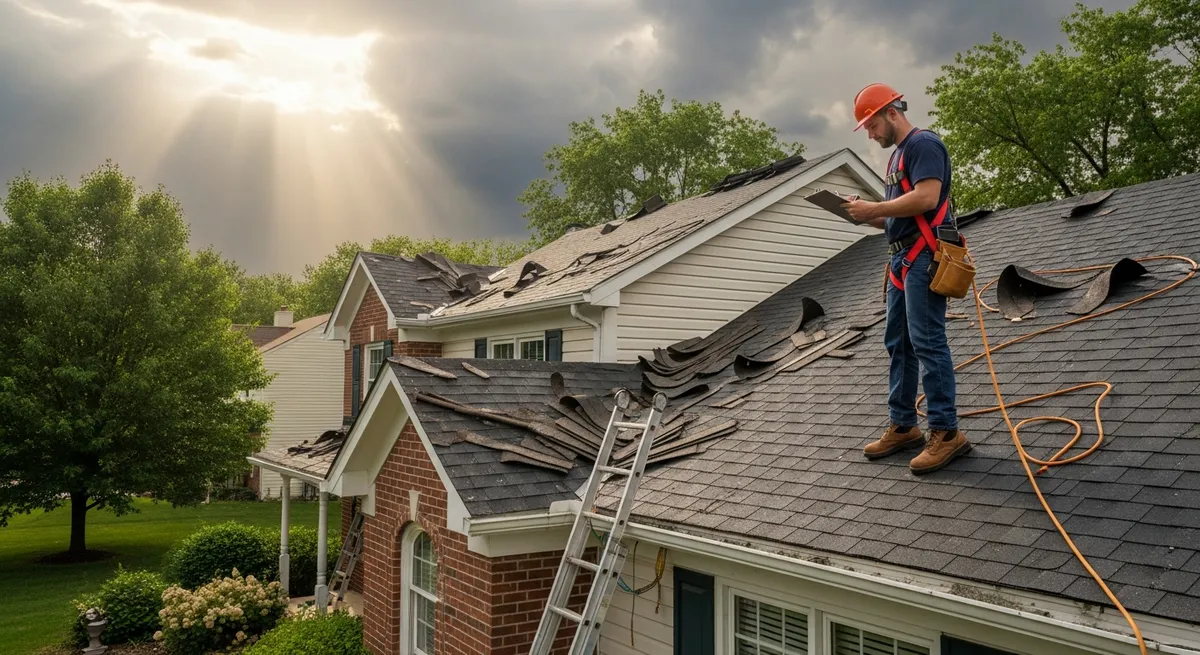
But foundation damage is only part of the picture. Water that backs up behind a clogged gutter sits against the fascia board and can wick under the lowest row of shingles. That moisture damages roof decking from the edge inward, creating soft spots that go unnoticed until a roofer pulls shingles during a repair and discovers plywood that crumbles at the touch. The irony is hard to miss: a gutter system designed to protect the roof can actually cause roof damage if it is not maintained. This is one of the most overlooked roofing repair tips we share with homeowners.
Then there is landscaping. Without gutters directing water to designated drainage points, rain pours off the roof in sheets, eroding mulch beds, drowning plantings, and creating muddy trenches along the perimeter of the house. What started as a gutter problem becomes a curb appeal problem and, eventually, a property value problem.
Siding takes a beating too. When water cascades directly off a roof edge without gutters to catch it, the splash-back kicks dirt, mulch, and moisture against the lower courses of siding. Vinyl siding handles this better than wood, but even vinyl develops mildew and discoloration over time when constantly exposed to ground-level splash. Wood siding in the same situation can rot from the bottom up, leading to expensive repairs that would not have been necessary if the water had been directed away properly in the first place.
In short, gutters are a relatively small investment that protects much larger investments: your roof, your foundation, your siding, and your landscaping. Understanding the options available and what drives the cost of installation puts you in a strong position to make a smart decision for your home.
House Gutter Installation: Gutter Options in Plain English
Walk into a showroom or browse a contractor website and you will see a dizzying number of gutter options. The reality is simpler than it looks. Most residential house gutter installation projects come down to a few core decisions: material, profile, and whether to go seamless or sectional.
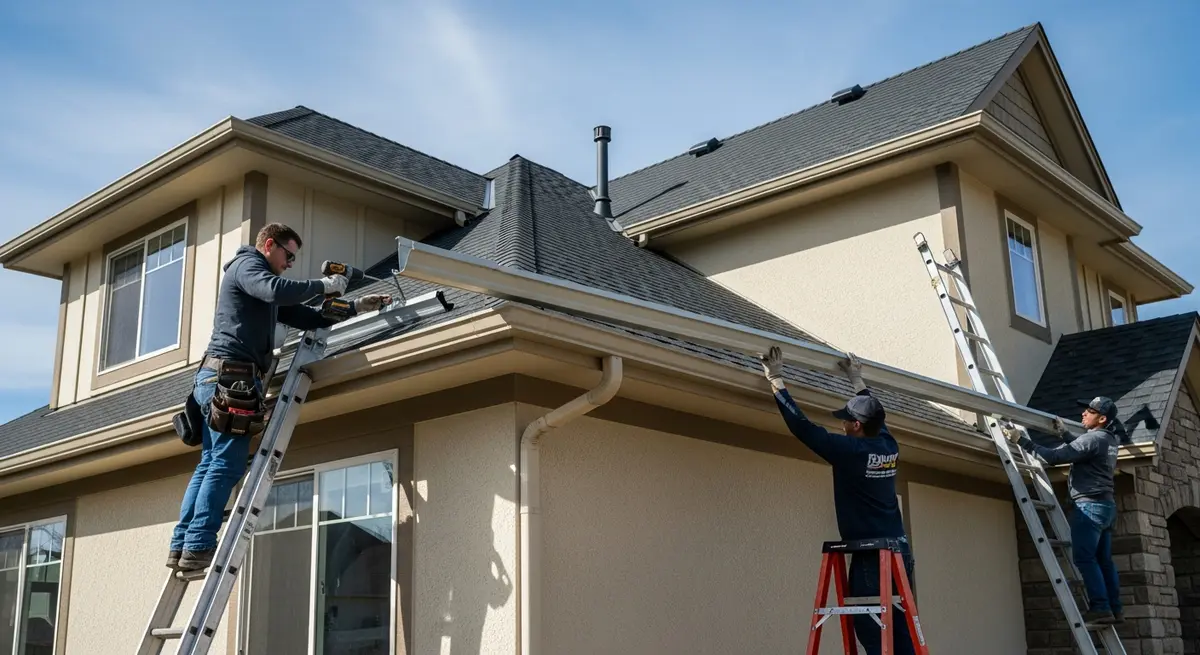
Aluminum is by far the most popular choice in Northern Virginia, and for good reason. It is lightweight, rust-proof, available in dozens of colors, and affordable enough that it makes sense for nearly every budget. Most seamless gutter systems are fabricated from aluminum right on site using a portable roll-forming machine, which means the installer can cut each run to the exact length of your roofline with no joints along the way. That matters because joints are where leaks start.
Copper gutters are the luxury option. They develop a beautiful green patina over time and can last 50 years or more without any coating or treatment. The downside is cost. Copper gutter installation typically runs three to four times the price of aluminum, so it tends to show up on historic restorations, high-end custom homes, and properties where the homeowner values aesthetics as much as function. If your home is in a historic neighborhood in Northern Virginia and you want gutters that complement the architecture, copper is tough to beat.
Steel gutters split the difference between aluminum and copper. They are stronger and more resistant to denting from ladders, branches, and hail. Galvanized steel is the affordable version, though it can eventually rust at cut edges and scratches. Stainless steel eliminates the rust concern but adds significant cost. In practice, steel gutters make the most sense for homes in wooded areas where falling limbs are a regular occurrence.
Vinyl gutters are the do-it-yourself darling of the home improvement aisle. They are inexpensive and snap together without special tools. The tradeoff is durability. Virginia summers heat vinyl to the point where it can warp, and winter freeze-thaw cycles make it brittle over time. For a rental property or a temporary solution, vinyl can work, but we rarely recommend it for a long-term house gutter installation on a primary residence.
As for profile, you will encounter two main shapes. K-style gutters have a flat back and a decorative front that resembles crown molding, and they are the standard on most homes built in the last several decades. Half-round gutters are the tubular, U-shaped style you see on older and colonial-style homes. Half-round systems are a bit less efficient at moving high volumes of water but look fantastic on the right house. Choosing between them is partly aesthetic and partly practical, and a good installer will walk you through the tradeoffs for your specific roofline.
Size matters too. The standard residential gutter is five inches wide, which handles the runoff from most homes without issue. Homes with steep roofs, large roof planes, or areas that receive concentrated water flow from multiple converging roof sections may benefit from six-inch gutters. The larger profile catches more water per linear foot and is less prone to overflow during heavy Northern Virginia thunderstorms. Your installer should calculate the expected water volume for each roof section and recommend the appropriate size rather than defaulting to one option for the whole house.
What Changes the Installation Price the Most
If you call three gutter companies and get three wildly different quotes, do not panic. That is normal, and it usually comes down to a handful of variables that change the scope of the job more than most homeowners realize.
The first and most obvious factor is linear footage. A single-story ranch with a simple roofline might need 120 feet of gutter. A two-story colonial with multiple dormers, bump-outs, and a wraparound porch could need 250 feet or more. More material, more labor, more cost. Beyond length, the number of corners matters because every inside or outside corner requires a custom miter joint that takes time to fabricate and seal properly.
Roof height and accessibility play a bigger role than people expect. A gutter crew working on a single-story home can often complete the job from a standard extension ladder. A three-story townhome or a house built on a slope where the back wall towers 30 feet above grade will require scaffolding or a lift, and that equipment adds real cost to the project. The same crew might finish the ranch house in half a day and need a full day and a half for the townhome, even if the linear footage is similar.
Fascia condition is the hidden cost driver that catches homeowners off guard. If the installer pulls off old gutters and discovers rotted fascia boards underneath, those boards need to be replaced before new gutters can go up. Rotten fascia cannot hold the weight of a water-filled gutter system, and installing over damaged wood is a recipe for failure. In Northern Virginia, wood fascia rot is especially common on north-facing elevations that stay damp longer after rain and rarely get direct sunlight to dry out.
Downspout configuration also influences the final number. More downspouts mean more material, more elbows, more brackets, and more time cutting into the gutter trough. That said, skimping on downspouts is a false economy. An undersized drainage system overflows during heavy rain, which defeats the entire purpose of the installation. A properly designed system places a downspout every 20 to 30 feet and routes the water at least four feet away from the foundation.
Finally, material choice brings its own cost curve. A full house gutter installation in standard aluminum might run $1,200 to $2,500 for a typical Northern Virginia home. The same home in copper could easily reach $5,000 to $10,000 or more. Steel falls somewhere in between, and vinyl sits at the low end but carries the shortest lifespan.
Timing can influence cost as well. Late fall and early spring are peak season for gutter installers in Northern Virginia because homeowners are either preparing for winter or dealing with the aftermath. If your project is not urgent, scheduling during the slower summer months may yield slightly better pricing and faster turnaround. That said, never delay a replacement on a system that is actively failing just to save a few dollars on scheduling. The cost of water damage from a failing gutter system during a single heavy rain event can exceed the entire cost of a new installation.
One more cost consideration: disposal of the old system. Most professional installers include removal and disposal of existing gutters in their quote, but it is worth confirming. Some homeowners are surprised to find a separate line item for hauling away old aluminum or steel. Asking about disposal upfront avoids an awkward conversation at the end of the project.
Gutter Guards: When They Actually Help
Gutter guards are one of those products that promise a lot and deliver a range of results depending on the type, the environment, and the homeowner's expectations. The pitch is appealing: install a guard and never clean your gutters again. The reality is more nuanced.
Screen-style guards are the most affordable option. They sit on top of the gutter and keep large debris like leaves and twigs out while letting water pass through. They work reasonably well in neighborhoods with moderate tree cover, but fine debris like pine needles, shingle granules, and seed pods can still slip through and accumulate over time. You will clean less often, but you will still clean.
Micro-mesh guards use a finer screen that blocks smaller debris. These are the best-performing guards on the market for most Northern Virginia homes, especially properties surrounded by oaks, maples, and pines that shed a diverse mix of organic material throughout the year. The tradeoff is cost. Micro-mesh systems typically add $8 to $15 per linear foot to the gutter installation, which can double the project price on a large home.
Reverse-curve guards use surface tension to guide water around a curved lip and into the gutter while debris slides off the front edge. They are effective in some situations but can struggle during heavy downpours when the volume of water overshoots the curve and cascades over the edge entirely. In a region where summer thunderstorms can produce intense rainfall in short bursts, this is a meaningful consideration.
Our honest advice? Gutter guards are worth considering if you have significant tree coverage and want to reduce maintenance frequency. But go in with realistic expectations. No guard eliminates cleaning entirely, and the cheapest options often create more problems than they solve when they collapse into the gutter trough under the weight of accumulated debris. Invest in quality micro-mesh or stick with a twice-a-year cleaning routine.
One detail that often gets overlooked is the impact of gutter guards on winter performance. In Northern Virginia, ice and snow can accumulate on top of guards and create a dam effect at the roof edge. Solid-surface guards like reverse-curve designs are especially prone to this because snow cannot pass through the way water does. If your roof has low-slope sections or north-facing elevations that hold snow longer, discuss winter performance with your installer before committing to a specific guard type. Sometimes the simplest solution, a quality gutter with no guard and a commitment to seasonal cleaning, outperforms a more expensive guarded system in our climate.
If you do invest in guards, plan for occasional professional inspection even if the gutters appear to be flowing freely. Debris can build up on top of the guard surface and reduce water intake without creating a visible clog. A quick check every couple of years ensures the guards are performing as intended and that the fasteners securing them to the gutter lip have not loosened or corroded.
Maintenance Checklist That Keeps Gutters Working for Decades
The best gutter system in the world will fail without basic upkeep. Fortunately, gutter maintenance is straightforward and does not require expensive tools or professional expertise for most homeowners. Here is a practical roofing repair tips checklist that we recommend to every client.
Clean gutters at least twice per year. In Northern Virginia, the ideal timing is late May after spring pollen and seed pods have dropped and mid-November after deciduous trees have finished shedding their leaves. If your property has pine trees, consider adding a midsummer cleaning because pine needles accumulate steadily rather than all at once.
While you are cleaning, inspect the gutter slope. Gutters should pitch toward each downspout at a rate of roughly a quarter inch per ten feet of run. If water is pooling in sections rather than flowing toward the downspout, the hangers may have loosened or the fascia behind them may have softened. Correcting slope issues early prevents standing water that breeds mosquitoes, accelerates corrosion, and adds weight that pulls gutters away from the house.
Check downspout connections and extensions. Downspout elbows are a common clog point because they change the direction of flow. Run a garden hose through each downspout to verify it drains freely. If water backs up, a plumber's snake or a pressure washer attachment usually clears the obstruction. At the bottom, make sure extensions or splash blocks direct water at least four feet from the foundation. Underground drain lines should be flushed annually to verify they have not collapsed or filled with sediment.
Look for signs of wear during each cleaning. Rust spots on steel gutters, white chalky residue on aluminum (oxidation), peeling paint, separated seams, and loose hangers all indicate issues that are easier and cheaper to fix now than they will be next year. Catching a small seam leak early is a tube of sealant and ten minutes. Ignoring it can mean replacing an entire gutter run and the fascia behind it.
After heavy storms, which are common in Northern Virginia from late spring through early fall, take a few minutes to walk the perimeter of your home and visually inspect the gutters from ground level. Look for sections that are pulling away from the fascia, water staining on the siding below gutter joints, and any debris visible above the gutter lip. A post-storm check takes five minutes and can catch problems that would otherwise go unnoticed until the next big rain creates a much larger issue.
If your home is two stories or higher and you are uncomfortable working on a ladder, professional gutter cleaning services in Northern Virginia typically charge between $150 and $300 per visit depending on the size of the home and the severity of the buildup. That is a worthwhile investment considering the cost of repairing water damage to fascia, siding, or a foundation wall. Many roofing companies, including Sterling Roofers, offer gutter maintenance as part of a broader roof care program.
How Gutters Connect to Roof Repairs
One of the most common things we see during roof inspections is damage that traces back to a gutter problem rather than a roofing material failure. When gutters clog, water overflows backward under the drip edge and saturates the starter course of shingles and the plywood decking beneath them. Over a season or two, that moisture causes the decking to delaminate and the shingle adhesive to fail, creating an entry point for water during wind-driven rain.
Ice dams are another connection point. In Northern Virginia winters, clogged gutters prevent snowmelt from draining off the roof. Instead, it refreezes at the roof edge and creates a dam of ice that forces water upward beneath shingles. The resulting leaks stain ceilings, soak insulation, and can go undetected for weeks inside wall cavities. A functioning gutter system will not prevent every ice dam, but it eliminates the primary condition that allows them to form.
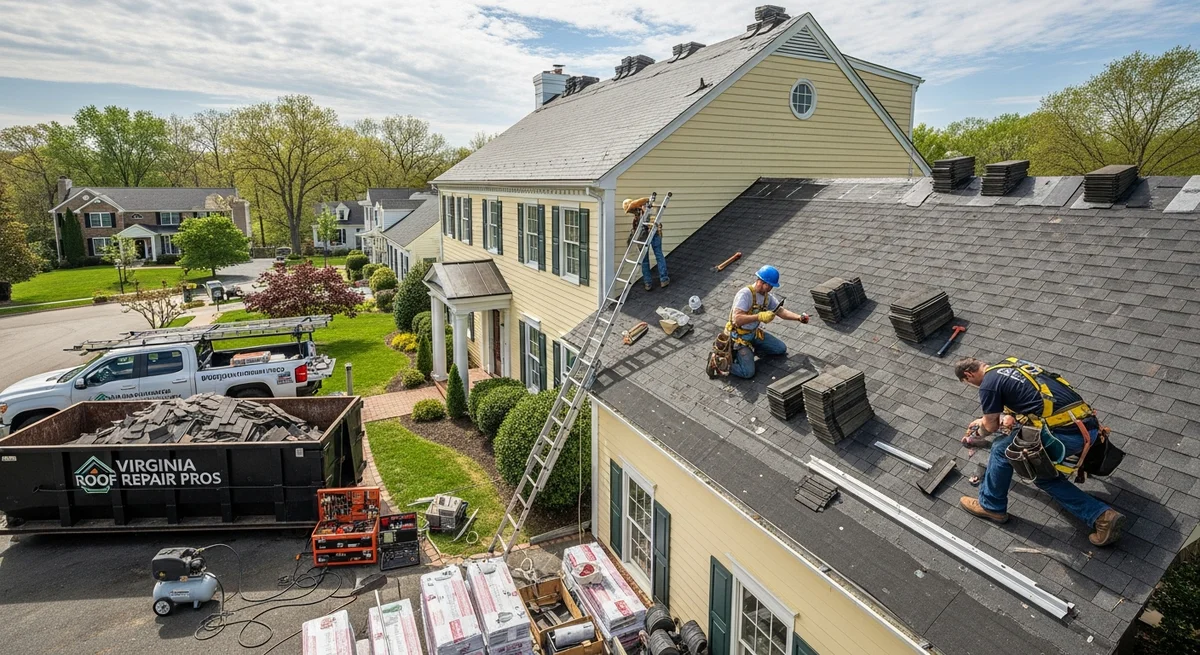
If you are scheduling a roof repair or replacement, that is the ideal time to evaluate your gutters as well. Roofers are already on-site with ladders and safety equipment, and coordinating both projects avoids the disruption and cost of a second mobilization. It also ensures the new gutter system integrates properly with fresh drip edge, underlayment, and flashing. For more on coordinating roof work, visit our services page or read about storm and hail damage repair for situations where gutters and roofing issues overlap after severe weather.
At Sterling Roofers, we evaluate the entire water management system during every roof inspection because gutters, flashing, and shingles work together as a team. Fixing one without checking the others is like replacing a tire without aligning the wheels. It might feel complete, but you are setting yourself up for problems down the road.
There is also a financial angle worth mentioning. If your roof is damaged by a storm and you file an insurance claim, the adjuster will often include gutter replacement in the scope of the claim if the existing gutters were damaged by the same event. Dented aluminum, bent hangers, and gutters knocked out of alignment by falling branches are all legitimate storm damage. Having a knowledgeable contractor document gutter damage alongside roof damage ensures the full scope is captured in the claim. You can learn more about navigating that process in our storm and hail damage guide.
Ultimately, a house gutter installation is one of the most cost-effective improvements you can make to protect your home. Compared to the price of foundation repair, which can easily exceed $10,000 in Northern Virginia, or mold remediation in a water-damaged attic, the cost of quality gutters is modest. Think of it as insurance you can see working every time it rains.
If you are unsure whether your existing gutters need replacing or just a tune-up, a professional inspection takes about 30 minutes and gives you a clear picture. At Sterling Roofers, we check slope, hanger condition, seam integrity, downspout flow, and fascia health during every gutter evaluation. Most of the time, we can tell you exactly what needs attention and what can wait, so you can budget accordingly and prioritize the work that matters most.
The bottom line is this: gutters are not glamorous, but they are one of the hardest-working components on your home. Invest in quality materials, hire a professional installer who understands Northern Virginia conditions, keep up with seasonal maintenance, and your gutter system will quietly protect your roof, foundation, siding, and landscaping for decades to come.
Ready for New Gutters?
Request a gutter installation quote from Sterling Roofers. We serve Sterling, VA and all of Northern Virginia. Call us at (703) 436-4445 or book online.
Get Your Free Quote